If you’ve ever watched a child disappear into a swirl of paint or spend twenty quiet minutes shaping a lump of clay, you’ve seen something powerful. Art isn’t just a cute activity or a rainy-day backup plan. It’s a way children make sense of themselves and the world around them.
This is the heart of what Montessori art educator and curriculum developer Spramani Elaun shared during her LiveTalk session. With decades of experience as an artist, homeschool parent, and international trainer, she reminds us that art is not an “extra.” It’s a vital part of growing up in the 21st century. And honestly, her message couldn’t come at a better time.
Join our Childhood Potential Club to watch the full video.
Why visual arts matter more than we think
We often talk about creativity as something “nice to have.” But Spramani invites us to see it as a life skill. A necessary one.
When children create, they aren’t just making something pretty. They’re learning how to approach problems with flexibility, how to slow down and focus, and how to express feelings that don’t always fit into words. Spramani reminded us that these moments of exploration shape the very skills children will lean on as adults navigating a fast-changing world. It’s not about teaching children to become artists. It’s about growing thinkers, innovators, and emotionally grounded humans.
And all of this begins earlier than most of us realize. These are the same skills they’ll rely on as adults when life gets messy, complicated, or uncertain. Art gives children a safe place to explore big ideas in a way that feels natural and deeply satisfying.
Art as the training ground for 21st-century skills
Spramani talked about something many of us feel intuitively: today’s children will face challenges we can’t yet imagine. Climate change, technology shifts, global issues… the world is moving fast.
But children don’t learn to innovate through worksheets or flashcards. They learn it through doing. Exploring. Trying. Failing. Trying again. That’s the hidden magic inside a simple art setup. When a child experiments with color, mixes materials, or tries a new technique, they’re practicing the same mental habits creative thinkers and problem-solvers rely on.
It’s not about producing a beautiful picture.
It’s about building a flexible mind.
Creating art spaces that actually work in real homes
You don’t need a Pinterest-perfect studio or shelves full of supplies to support your child’s creativity. Spramani explained that what children really need is:
• a small, consistent space
• a few thoughtfully chosen materials
• freedom to explore without fear of mess or mistakes
A low table. A washable surface. A basket of materials the child can actually manage. That’s it. The goal isn’t to control the process. It’s to invite it. When we remove the pressure of perfection, for us and for the child, creativity begins to flow naturally.
What art looks like at every age
Art development, like everything else in early childhood, follows a natural progression. In the toddler years, children explore with their whole bodies—big movements, big strokes, big curiosity. As preschoolers, those marks become more intentional. Shapes begin to appear. Lines gain purpose. And by the early elementary years, children often shift toward storytelling, diagrams, watercolor techniques, charcoal, and more symbolic or representational forms.
Spramani emphasized that through all these stages, one thing remains essential: the process matters more than the product. Children aren’t creating to impress us. They’re creating to understand their world. Our role is simply to offer the materials, model without correcting, and step aside so they can discover what interests them.
Art as emotional nourishment
Spramani also spoke about something many parents feel instinctively but don’t always have words for. Art isn’t only an intellectual experience. It’s emotional nourishment. The simple act of drawing slow lines or spreading paint across paper can soothe a busy mind. The textures, colors, and rhythms of artmaking help many children unwind after a long or overstimulating day.
Some children process their feelings through words. Others process through movement. Many process through art. For some children, art becomes a refuge. For others, it becomes a joyful experiment in self-expression. For all, it becomes a language — one that feels just as important as spoken words.
Helping a child who “isn’t interested” in art
If your child doesn’t always gravitate toward art, Spramani reassures us that this is completely normal. Creativity shows up in many forms. It might be building towers, arranging objects, shaping play dough, or exploring how things fit together. Sometimes a child needs a new material, a gentle invitation, or simply you sitting nearby to rekindle their interest.
Your role is to offer experiences, guide gently, and notice what sparks their curiosity. Sometimes all a child needs is a fresh material, a short demonstration, or an invitation to try something alongside you. Rather than thinking of art as one specific activity, Spramani encourages us to see it as a broad landscape of exploration. There’s room for every child in it — even the ones who don’t think of themselves as “art kids.”
Making creativity part of daily life
Spramani closed her session with a reminder that creativity grows best when it’s woven into daily life. This doesn’t mean scheduling elaborate projects. It means offering small moments and simple routines that invite creativity naturally.
A basket of materials your child can reach.
Ten minutes of quiet drawing before dinner.
Painting outdoors once a week.
Weekend clay time with no agenda at all.
What matters is the consistency, not the complexity. When creativity feels accessible and welcomed, children begin to see it as part of who they are — not something they only get to experience when conditions are perfect.
The takeaway
Spramani’s message is clear and deeply reassuring:
You don’t need to be an artist to raise a creative child.
You just need to make space for creativity to unfold.
Visual arts aren’t about making perfect pictures.
They’re about shaping curious, courageous, imaginative thinkers who feel at home in their own ideas. And in a world that’s changing faster than ever, that might be one of the greatest gifts we can offer our children.
Meet Spramani
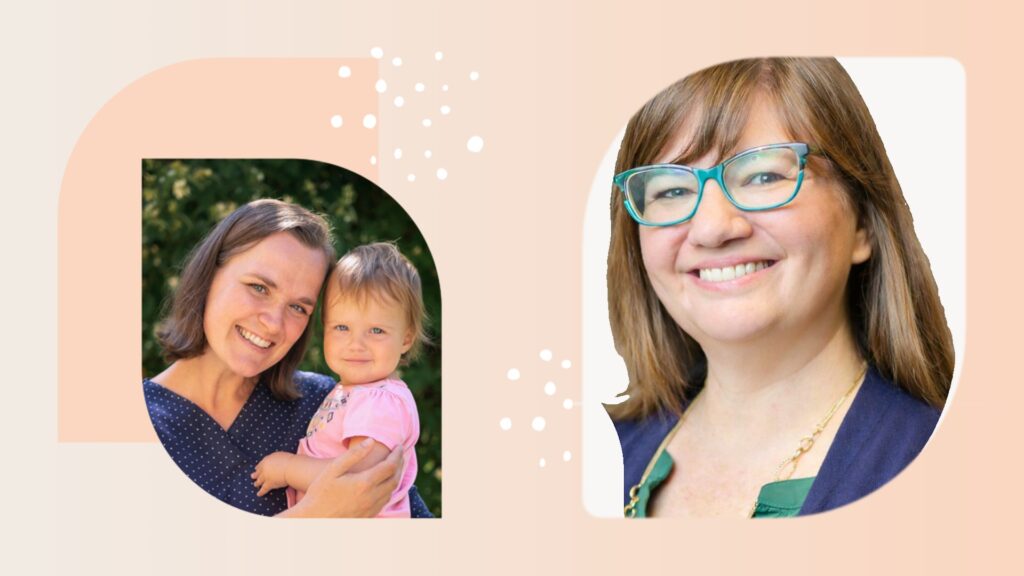
Spramani Elaun is an artist, mom, homeschooling parent, art trainer, curriculum developer, and the founder of Nature of Art® U.S.A. She is the author of The Way Children Make Art and Montessori Art Guide – Childhood.
With extensive experience as an international Montessori art trainer, Spramani runs The Art Teaching Blueprint™—a Montessori certification program offered worldwide. She also consults full-time with Montessori schools, helping them integrate art literacy into their classrooms.
Her method, grounded in sensory experiences and rooted in her unique Science Art Method™, offers a fresh approach to teaching visual arts. Through her expertise, Spramani inspires educators and parents alike to nurture creativity and connect with children through the universal language of art.