Your child says no over the wrong colour cup, and something rises in you that feels far bigger than a cup. Afterwards comes the part nobody talks about, the guilt, because you already know better. You have read the books. Some of you have done years of therapy. And still, there it is.
If that is familiar, you are in good company. It came up again and again in the chat during our last Expert LiveTalk, from parents and from teachers, from Switzerland to Tanzania.
This talk is part of our ongoing series inside the Childhood Potential Club, where members gain access to expert talks, live Q&A, and a library of sessions they can come back to whenever they need them.
The behaviour is outside, the size of it comes from before
Dr. Shefali does not argue that the behaviour is imaginary. Your child really did laugh in your face. Your teenager really did lie. What she asks us to look at is the size of the reaction, the degree to which it lands. That part, she says, comes from your own history. One more person not taking you seriously. One more person laughing at you.
Which leads to her central point. The one who cannot take it right now is not the adult you are today at thirty five or fifty five. It is the child inside you who once felt shattered and had nobody to help them.
Three reasons a child never means to trigger you
This was the most practical stretch of the hour, and the one members kept coming back to.
Children’s brains, she says, still have holes in them. They physically cannot process what we are asking them to process. They have not lived long enough to have practice, so the memory bank we are getting frustrated with is far more fragile than our own, and ours is already fragile. And underneath a lot of what looks like defiance there is fear, anxiety, or a child trying to regulate themselves with the only tools they have.
So a child who laughs in your face is often a child who is nervous. A child who kicks the door has run out of words. They cannot say “I am anxious”, so it comes out sideways.
We are asking children for something they cannot give
Because so many of us grew up without feeling seen, we quietly hand our children a job that was never theirs. Do you respect me. Do you think I am capable. Am I enough. Dr. Shefali calls this a distorted mirror, and she is direct about where it leaves us. Our real job is narrower and kinder than that. We help a small person cope with their reality, and we find our own worth somewhere other than in their behaviour.
In the moment, and after you have already yelled
Her first step is awareness, and she is honest that there is no shortcut. Map your own trigger zones. Seven in the evening. Bath time. The park. If you teach, you probably know which child in the room is yours to notice.
In the heat of it, she offers one rule that is short enough to actually remember. When in doubt, say nothing. Bite your tongue, leave the room, put water on your face, whatever it takes to get through the moment, and process it afterwards.
And when you have already yelled, she walks through repair in four parts. Awareness of what just happened. The apology. Accountability, naming why you lost it. And then action, one concrete thing you will do differently next time. She is clear that the apology alone is not the repair. The accountability and the action are.
Calming yourself is not the same as swallowing it
One of our members asked about the parent who goes quiet on the outside while boiling underneath, and whether children can feel the difference. They can. Dr. Shefali’s answer is that suppressing has its place in the moment, the way you would hold your tongue in a meeting, but it cannot be the long term plan, because what gets pushed down surfaces later and often sideways. Journalling, talking to someone, actually processing it, that is the work.
When you are the only one doing this work
Another question that comes up often in our community. What if your partner, or the grandparents, are still parenting with threats and punishments, and watching it becomes its own trigger. Her answer is uncompromising. Our job is to buffer children from unconsciousness, ours and other people’s, as best we can. She would rather see a family with less money, less convenience, and fewer Christmases together than a child swimming in a toxic dynamic.
Meet Dr. Shefali
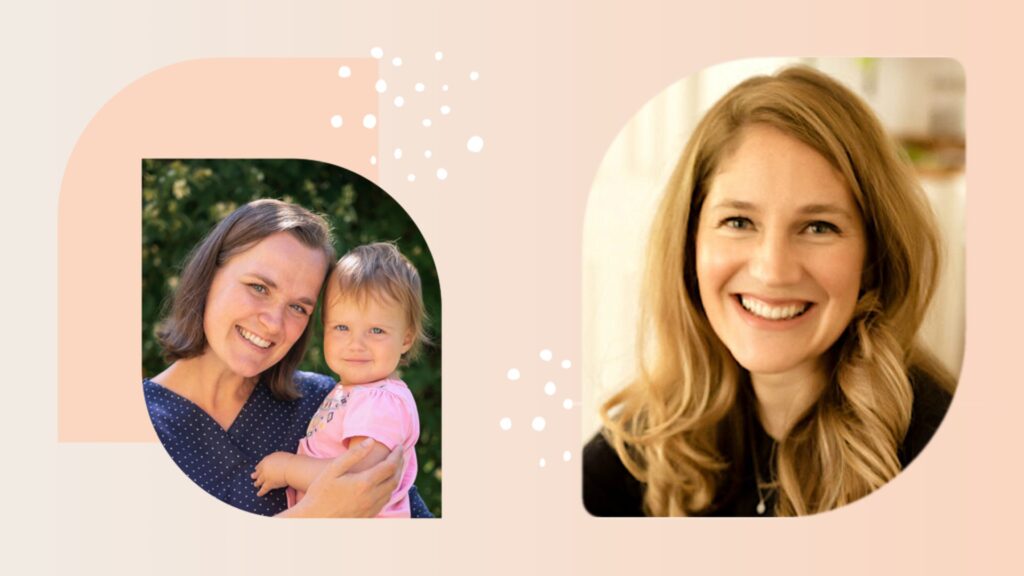
Dr. Shefali is a clinical psychologist trained at Columbia University and the pioneer of the conscious parenting movement. She is a multiple New York Times bestselling author of The Conscious Parent, The Awakened Family, A Radical Awakening and The Parenting Map, and Oprah has called her work revolutionary. She works with families, couples and women, runs retreats around the world, and trains parenting coaches through her coaching institute. Her two newest books, Raising Conscious Sons and Raising Conscious Daughters, are out on September 15.